

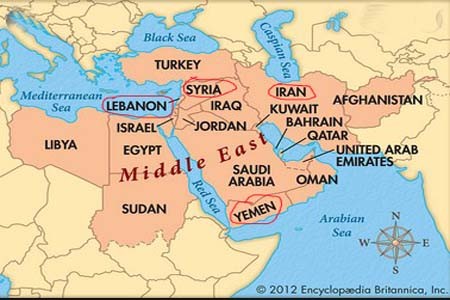
Recent military escalations in the Middle East, severe disruptions to the regional “Axis of Resistance,” and shifting global diplomatic alliances have highlighted a stark new reality in international relations. Ideological slogans and conventional asymmetric warfare strategies are increasingly confronting the unyielding realities of technology-driven modern battlefields and direct Western superpower intervention.
Following years of targeted precision strikes, leadership decapitations, and economic isolation, international relations and defense analysts broadly conclude that the concept of militarily erasing Israel from the world map is structurally and technologically unfeasible.
1. Fracturing of the “Axis of Resistance”
Sustained military operations, intelligence penetration, and targeted decapitation strikes have severely impaired regional proxy networks:
* Hamas and the Gaza Corridor: Intensive military campaigns and the systematic elimination of key operational figures have functionally dismantled Hamas’s administrative and high-command military infrastructure in Gaza.
* Degradation of Hezbollah: In Lebanon, targeted intelligence operations and precision airstrikes against senior political and military leadership—alongside the disruption of secure communications—have significantly constricted Hezbollah’s organizational cohesion and retaliatory capacity.
* Strategic Isolation of Iran: Whenever direct missile or drone volleys have been launched, a coordinated coalition including the United States, the United Kingdom, European NATO allies, and regional partners has deployed integrated air defense shields. This collective defense umbrella has drastically limited Iran’s long-range strategic deterrence.
2. Advanced Defense Technology and Western Integration
The primary factor underwriting Israel’s operational security is the seamless integration of Western military doctrine and cutting-edge technology. Israel’s multi-layered air defense network—comprising the Iron Dome, David’s Sling, and the Arrow interceptor systems—is further augmented by deployed U.S. THAAD (Terminal High Altitude Area Defense) batteries and Aegis-equipped naval destroyers.
Military tacticians emphasize that raw manpower and asymmetric troop deployments cannot easily overcome real-time satellite tracking, stealth drone fleets, and AI-driven targeting matrices.
3. Diplomatic Shifts and the Abraham Accords
The contemporary geopolitical landscape bears little resemblance to the Arab-Israeli conflicts of 1948, 1967, or 1973.
[Historic Pan-Arab Alliances (1948–1973)]
│
▼
[Shift to National Interest & Security (1990–2000s)]
│
▼
[Abraham Accords & Regional Normalization (2020–Present)]
* Economic Prioritization: Most Middle Eastern states are prioritizing economic diversification, global supply chain integration, foreign direct investment, and technological development over regional conflict.
* The Abraham Accords Framework: Diplomatic and economic normalization agreements signed by nations such as the United Arab Emirates, Bahrain, Morocco, and Sudan have fundamentally altered regional diplomacy, creating explicit channels for security and intelligence cooperation with Israel.
* Factional and Regional Divergence: The broader Islamic world remains politically fragmented along sectarian, economic, and sovereign lines, making a unified, multi-state military coalition against Israel practically nonexistent.
4. Economic Sanctions and Institutional Containment
Beyond kinetic military capabilities, economic isolation acts as a primary tool of containment. Sanctions targeting the SWIFT banking network, international maritime trade restrictions, and aviation blockades severely constrain the financial pipelines of states like Iran and allied non-state actors such as the Houthis. Without sustained economic liquidity, maintaining prolonged high-intensity warfare becomes structurally unsustainable.
Strategic Conclusion
The modern global order is built upon international treaties, border integrity protocols, and global balance-of-power mechanics. Within this structural framework, attempts to militarily eliminate a recognized state are rendered obsolete by integrated defense networks, economic isolation tools, and superpower alliances.
Without a cohesive, unified long-term roadmap across diplomacy, economics, and technology, isolated kinetic actions remain incapable of shifting the broader geopolitical equilibrium.