
Israeli Prime Minister Benjamin Netanyahu has called for a strong right-wing national government as uncertainty over the outcome of the country’s general election complicates efforts to form a governing coalition. He has also warned against relying on Arab parties for parliamentary support, urging his supporters to wait for the final results.
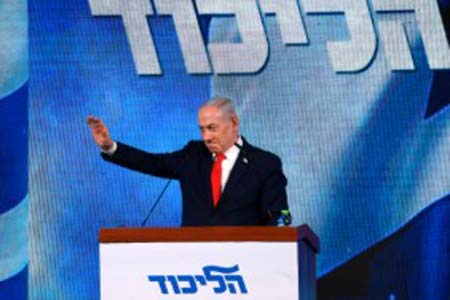
Speaking to party activists, supporters and journalists at Likud’s election headquarters in Jerusalem early Wednesday, October 28, Netanyahu said Likud was Israel’s largest political party. He also claimed that the right-wing bloc enjoyed strong support among Jewish and Zionist voters and those who supported the Jewish state.
“We must establish a strong, right-wing, national government,” Netanyahu said.
Netanyahu’s Bloc Leads With 54 Seats in Preliminary Count
Data released by Israel’s Central Elections Committee around midday Wednesday showed Netanyahu’s coalition bloc leading with 54 seats, including 27 seats for Likud, according to the figures cited in the original report.
Earlier exit polls released after voting ended on Tuesday, October 27, indicated a closely contested election.
Updated projections from Kan and Channel 13 put Netanyahu’s bloc and the four-party opposition grouping at 51 seats each, while Arab parties were projected to win 18 seats. Channel 12 projected 52 seats for Netanyahu’s bloc, 49 for the opposition grouping and 19 for Arab parties.
Israel’s Knesset has 120 seats, and a government generally requires the support of at least 61 lawmakers. The preliminary figures therefore pointed to difficult coalition negotiations, with neither major bloc clearly securing a parliamentary majority.
Exit polls and preliminary counts, however, are not the same as final certified election results.
Netanyahu Rejects Dependence on Arab Parties
Netanyahu opposed forming a government dependent on Arab parties, describing some of them as anti-Zionist. He accused those parties of opposing Israel’s existence and taking positions against Israeli soldiers.
He also challenged politicians who advocate building a coalition around people who serve in the military while leaving open the possibility of cooperation with Arab political parties.
His remarks placed the role of Arab lawmakers at the centre of the post-election coalition debate. However, his accusations represent his political position and should not be treated as independently established facts without further verification.
Netanyahu Highlights Military Achievements and Iranian Threat
Addressing Likud activists after a night of supporters chanting “Only Bibi!”, Netanyahu highlighted what he described as his government’s military achievements. He argued that significant work remained unfinished.
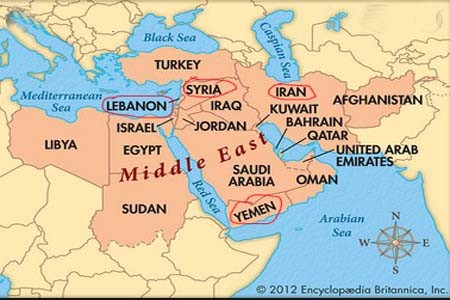
“Iran is weaker than ever; Israel is stronger than ever,” he said.
Netanyahu also described an opportunity to work with US President Donald Trump to counter the Iranian threat. He warned that security risks would continue as long as Iran’s current regime remained in power.
His remarks underscored the importance of national security and military strength in his election message, even as the political focus shifted to the challenge of securing a parliamentary majority.
Likud Lawmaker Questions Early Projections
Likud member of the Knesset Amit Halevi disputed the initial projection that Netanyahu’s bloc would win 50 seats. He argued that the estimate understated the coalition’s actual support and suggested that the final outcome could be different.
Halevi described the election as a response by Israeli society to the October 7 attacks and the subsequent years of war. He said voters had not remained indifferent but had turned out to express their views through the ballot box.
He also raised concerns about the projected strength of Arab parties. According to Halevi, his objections concerned what he characterised as their political ideology rather than their ethnic identity.
Halevi further questioned whether Yashar leader Gadi Eisenkot could successfully form a government that depended on political figures Halevi described as radical. His comments reflected the sharp divisions surrounding possible coalition arrangements.
Netanyahu’s Supporters Express Confidence
Despite the uncertain election projections, Netanyahu’s supporters gathered at Likud headquarters in Jerusalem, where journalists, party activists and sitting lawmakers filled the venue. Israeli music played as blue-and-white party decorations and campaign posters surrounded the gathering.
Meir Cohen, a longtime Likud supporter, expressed confidence in Netanyahu’s leadership.
“I trust Bibi,” he told The Jerusalem Post.
Cohen said his connection to Likud dated back to his birth in 1973. He also recounted a family connection to former Israeli prime minister Menachem Begin, who, according to Cohen, served as his sandak during the Jewish circumcision ceremony.
Cohen questioned the early projections released by the country’s three main broadcasters. He credited Netanyahu with strengthening Israel’s military capabilities and international standing.
“He will protect us. He will continue to protect us,” Cohen said.
Supporters Call for National Unity
Another supporter, Tomer Shlomi Mishkaf Lavan, said the election was about Israel’s future and the need to bring its people together.
“We are fighting for the future of the State of Israel,” he told The Jerusalem Post, calling for strong leadership capable of uniting the country.
He referred to political divisions, heated arguments, protests, burning tyres and road blockades over the previous four years. He said he wanted greater calm, an end to protests and a more constructive atmosphere among Israelis.
“We need mutual responsibility. We need people to love one another,” he said.
Asked why he had attended the Likud gathering, he again emphasised unity.
“I came here to express my opinion. My opinion is unity,” he said.
He expressed hope that Netanyahu would help bridge the country’s divisions and guide Israel towards a more stable future.
Another supporter also urged patience, questioning whether the early projections accurately reflected Netanyahu’s support.
Coalition Negotiations Remain Uncertain
The preliminary figures suggest that Netanyahu’s right-wing bloc may have emerged as the leading coalition grouping, but securing the support required to form a government remains a challenge.
The opposition faces its own difficulties in building a viable parliamentary majority. The number of seats won by Arab parties and the question of whether other political groups will cooperate with them could prove decisive in the negotiations.
The final election results and subsequent coalition discussions will determine whether Netanyahu can form another government or whether Israel will move towards a different political arrangement.
Source: The Jerusalem Post.